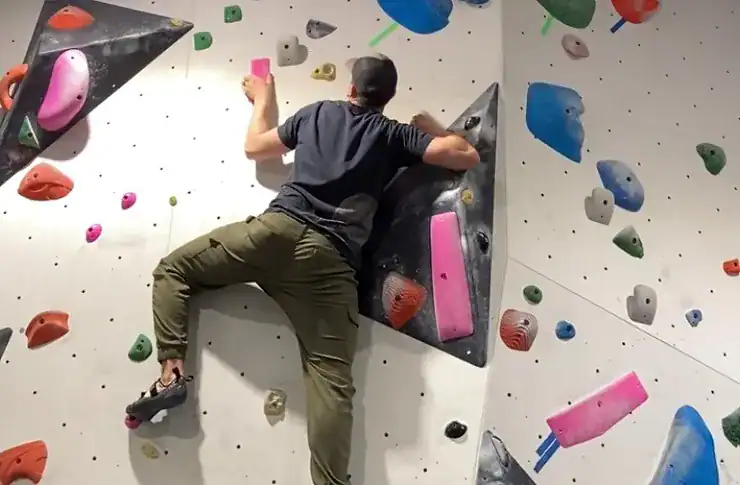
Don’t forget to go to for more information on climbing injury prevention, https://totalpursuitpt.com/ for more information on climbing injury prevention, and be sure to download my FREE injury prevention guide!Injury prevention is an important component of a long, healthy climbing season. It’s necessary to understand how to perform a proper warmup of all major muscle groups before trying to send your first route for the day. Next time you head to the gym or the crag, try these simple warmup exercises before jumping on the wall. You may just be surprised at how good you feel during your first ascent!
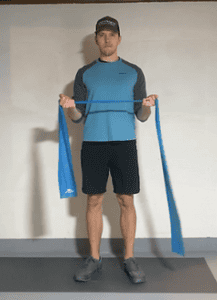
Reduce Shoulder Pain and Improve Shoulder Stability While Climbing: Standing bilateral shoulder external rotation with a resistance band
-
This is a great warmup for your rotator cuff. This exercise will promote blood flow and oxygenation to the muscles in order to improve elasticity, as well as prime your nervous system to recruit these important shoulder stabilizers while climbing. Nothing ruins your day like going for that gaston with a cold shoulder!
-
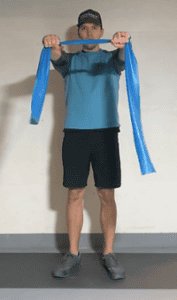
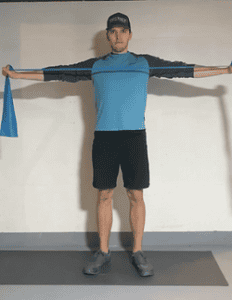
Begin in an upright standing position with your arms by your sides, holding a resistance band in both hands. Bend your elbows to approximately 90 degrees with your palms up.
-
Slowly rotate your forearms out to the side. As you do so, pinch your shoulder blades down and back together. Pause briefly, then return to the starting position. Make sure that you keep the bend in your elbows as you rotate your arms. Avoid shrugging your shoulders.
-
Repeat for 15-20 repetitions
Reduce Shoulder Pain and Improve Shoulder Mobility While Climbing: Horizontal abduction with a resistance band
-
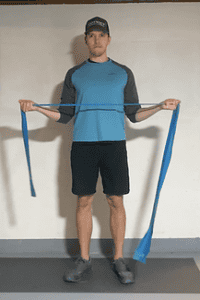
Similarly to the above exercise, this one is priming the muscles of your back that control your shoulder blades, sometimes referred to as “periscapular muscles.”
-
Begin in a standing position holding a resistance band in each hand with your arms straight in front of your body
-
Pull your arms apart while simultaneously squeezing your shoulder blades together and down. Resist the urge to shrug your shoulders. Slowly return to the starting position
-
Repeat for 15-20 repetitions
Reduce Shoulder Pain, Improve Shoulder Stability, AND Improve Shoulder Mobility While Climbing: 90-90 External rotation with a resistance band
-
This exercise promotes proper positioning of your shoulders while climbing, which consists of activating your rotator cuff in order to keep your elbows in toward the wall, as opposed to flaring out away from it.
-
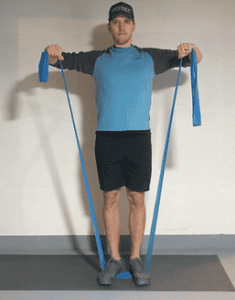
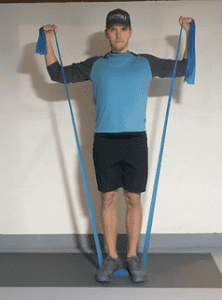
Begin standing on a resistance band, holding the ends in each hand with your shoulders elevated to 90 degrees, elbows bent at 90 degrees with palms facing the ground
-
Rotate your shoulders backward, so that your palms are facing forward, slowly return to the starting position
-
Repeat for 15-20 repetitions
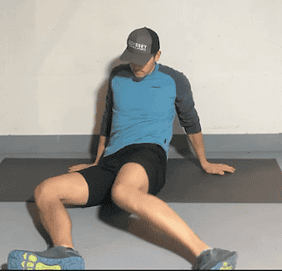
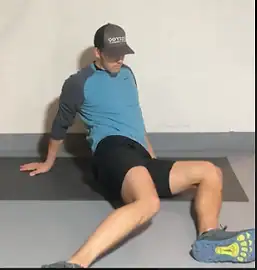
Reduce Hip Pain and Improve Hip Mobility While Climbing: Seated hip rotations
-
Now that we’ve warmed up the upper body, let’s work on the lower body, starting by getting a little motion in those hips!
-
Begin in a sitting position with your knees bent, feet on the ground.
-
Gently rotate both knees toward the ground until you feel slight resistance, then reverse directions and go the opposite way. Feel free to allow your pelvis to roll side to side with the motion of your hips in order to work your pelvic mobility as well.
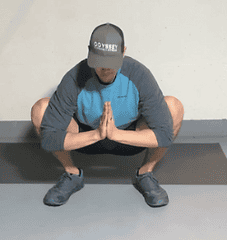
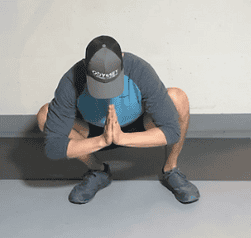
Reduce Hip Pain and Improve Hip Mobility While Climbing: Yogi squat with weight shifts
-
Begin in a deep squat with your feet slightly toed out
-
Take a few deep breaths as you relax into the squat, feeling your inner thigh and groin muscles stretch out
-
Shift your weight side to side in order to emphasize the stretch into both hips. Remember not to press into any pain. All stretching should be pain-free.
If you want more information on how we can help you reduce pain and improve your ability to enjoy all of your life’s pursuits without unnecessary medications, injections, or surgery, click HERE to set up a free, no strings attached phone consult where we will talk through your goals and determine if we are a good fit to work together!
Disclaimer- For information and educational purposes only. The above content is not intended as medical advice.
About the Author:
As a doctor of physical therapy, my role in healthcare is to diagnose and treat injuries of the musculoskeletal system, assess movement, and optimize performance. My passion is to help outdoor enthusiasts maintain and enhance their active lifestyle without unnecessary medications, injections, or surgery.
Whether you are gearing up for the hunt of a lifetime, recovering from a climbing injury, or just trying to keep up with your grandkids, everyone is in pursuit of something. I am here to help you achieve your goals and return to living the life that you desire.
-Matt Buch, PT, DPT, OCS