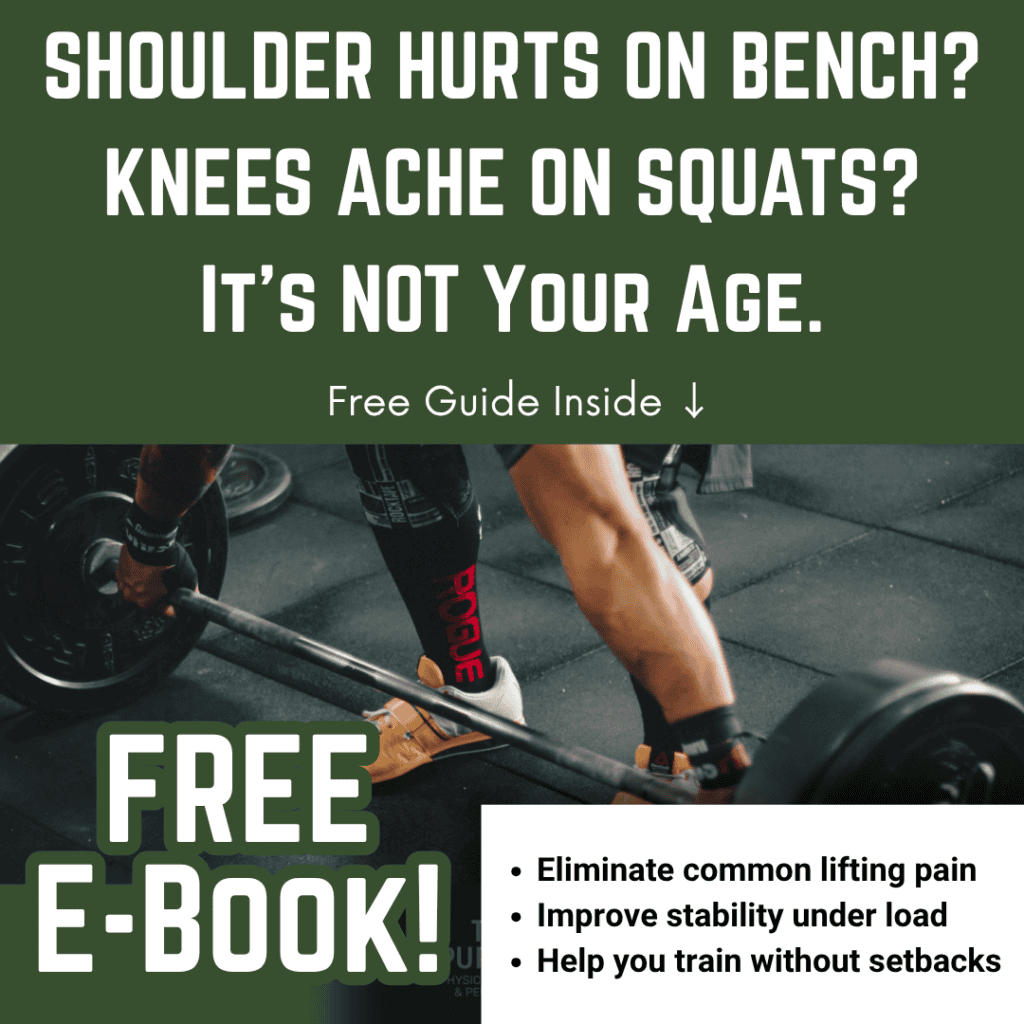
You Feel It Mid-Set… Again.
You’re halfway through your squat session—or pulling a heavy deadlift—and then it hits.
That familiar pinch in your hip.
A twinge in your back.
Or maybe your knees start barking halfway down, killing your confidence in the hole.
If this sounds familiar, you’re not alone—and you’re not broken. But here’s the truth: Pain with squats is a signal, not a life sentence.
And waiting for it to magically disappear? That’s a gamble.
When Should You Actually See a Physical Therapist?
Let’s be real. Some aches and pains are just the cost of training hard. But not all pain is harmless—and if you lift regularly, you need to know the difference between “normal soreness” and “get this checked” signals.
Here’s when you should see a PT:
You have pain during a specific part of the lift
If it always hurts at the bottom of your squat, or when you break the floor in a deadlift—your body is telling you something is off in your mechanics, mobility, or motor control. That’s not something a foam roller will fix.
The pain is lingering beyond 7–10 days
If the pain hasn’t improved after dialing back volume or modifying your lifts, it’s likely not just DOMS. Lingering pain means the issue is rooted deeper—often in movement patterns, stability, or strength imbalances.
You’re modifying your workouts around the pain
If you’re skipping lifts, avoiding depth, or only pulling light weight because of pain, that’s a huge red flag. You shouldn’t have to train around your goals.
You’ve tried rest, ice, stretching—and nothing’s changed
If you’ve taken time off and still can’t squat or pull without pain, it’s time for a new approach. (Spoiler: rest alone doesn’t fix dysfunction.)
Why Lifting With Pain Usually Doesn’t Just “Go Away”
A lot of lifters will try to push through pain—until it gets bad enough to force them out of the gym.
By that point, the problem is no longer just physical.
It’s mental, too. You lose confidence under the bar. You second-guess your form. You plateau—or worse, regress.
The longer you wait, the longer it takes to bounce back.
The good news? Most lifting-related pain is fixable—without surgery or long-term rest—if you address it at the source.
What We Do Differently at Total Pursuit PT
At Total Pursuit Physical Therapy & Performance in Green Bay, we work with lifters every day who’ve been told to “just stop lifting” or “take 6 weeks off.”
We don’t believe in babying athletes. We believe in fixing the root cause.
Here’s how:
1. Find the Real Cause
We look beyond the pain and evaluate your movement patterns, load tolerance, and biomechanics. We figure out why it hurts—so we don’t just treat the symptom.
2. Fix the Problem Areas
Whether it’s limited ankle mobility killing your squat depth, core instability affecting your deadlift lockout, or imbalanced glutes throwing everything off—we address it with hands-on therapy and targeted strength work.
3. Build You Back Stronger
You’re not here for temporary relief. You’re here to perform. We get you back to lifting pain-free—and help build the capacity to stay there.
Common Issues We See in Lifters:
For Squats:
- Ankle dorsiflexion limitations
- Hip mobility restrictions
- Lumbar flexion under load (butt wink)
- Knee valgus due to weak glutes or poor foot control
- Poor bracing or intra-abdominal pressure
For Deadlifts:
- Hip hinge patterning issues
- Core and lat engagement deficits
- Overuse of lumbar spine to initiate lift
- Hamstring or glute weakness
- Grip or asymmetry issues in sumo stance
You don’t need perfect anatomy to lift pain-free. But you do need the right plan to lift with confidence.
Don’t Wait Until You’re Sidelined
If squatting or deadlifting is giving you pain, don’t ignore it.
Don’t wait until your next competition or your next PR cycle gets thrown off.
You’ve worked too hard to let pain hold you back.
Ready to Fix It?
We offer free phone consultations so we can hear your story, understand what’s going on, and decide if we’re the right fit to help.
Let’s get you back to squatting and pulling with confidence.
🔗 Click here to schedule a free phone consult
P.S.
We accept HSA, FSA, and CareCredit—and we’ll always give you the full plan, cost, and timeline up front. No surprises. No insurance limitations. Just real results.