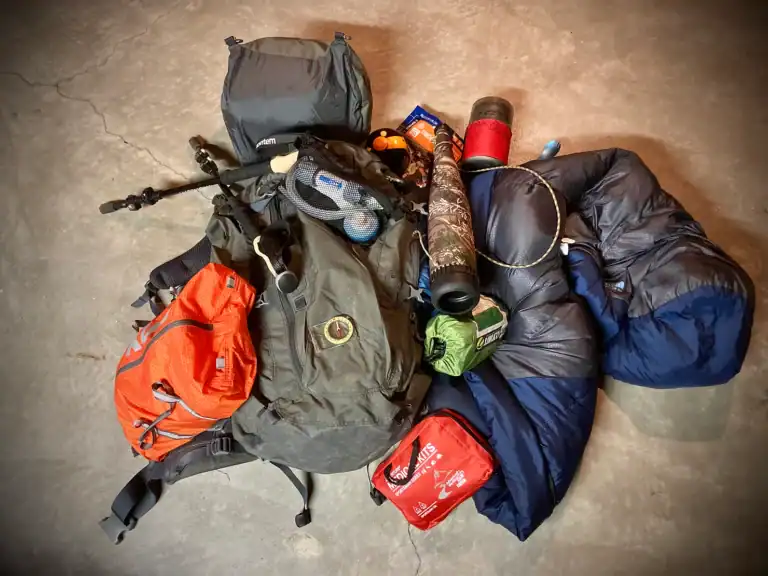
How to Properly Pack a Backcountry Backpack to Avoid Low Back Injuries While Hiking or Hunting
Don’t forget to go to https://totalpursuitpt.com/ for more information on hunting and backcountry injury prevention, and be sure to download my FREE backcountry injury prevention guide!
Have you ever packed up your backcountry pack only to completely dump everything out, repack, and repeat the process again and again? Yep, we’ve all been there. Today I want to talk a little bit about how to properly organize your backpacking or backcountry hunting pack in order to optimize weight distribution to reduce strain on your back, hips, and knees, as well as improve your efficiency while in the backcountry.
When we think about properly organizing a backcountry backpack you want to think “high and tight.” This means that when you’re planning out how you’re going to pack up all your gear, you want to make sure that you are keeping the majority of the weight both high in the pack as well as tight to the frame.
How to properly load a backcountry backpack to avoid low back pain or injuries- close to your center of mass:
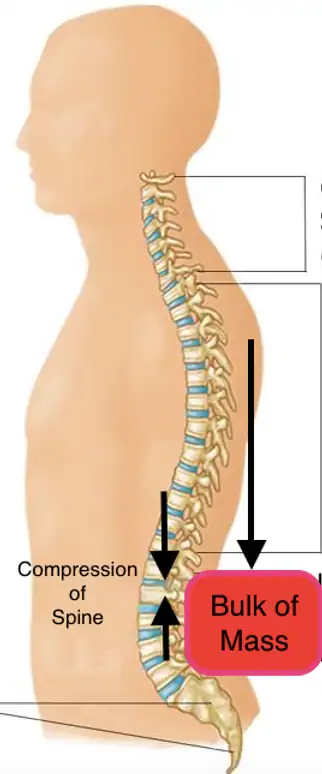
The further away the load is from your center of mass, the more torque that will be exerted on your lumbar spine, core, and hips ( see diagram below). In order to reduce that torque, we need to keep the weight as close to the frame of the pack as possible, meaning as close to our center of mass as possible. In order to prevent back pain or injuries while carrying a heavy pack, you should be keeping things such as water, food, your tent, cookware, etc. up close to the frame. This is also important when packing out game after a successful harvest. Anything light such as extra clothing layers, should be placed further away from your body so that the heavy meat can be placed up against the frame.

How to properly load a backcountry backpack to avoid low back pain or injuries- at the level of the shoulder blades:
When we think about where to keep the center of mass vertically, the most efficient way to carry weight is going to be up between your shoulder blades. Think about if you were to do a barbell squat- you hold the weight up around your shoulder blades, not down near your lumbar region. A lot of backpackers and backcountry hunters have a tendency to put the heaviest items on the bottom of their pack, which makes sense in theory as this is closer to the hips, but actually increases the amount of strain on your low back. This is because of the natural curve of your low back, known as lordosis. When you have weight hanging down around your low back, that’s putting a lot of pull downward on the lumbar spine. This increases the amount of force required by the core and lumbopelvic muscles to stabilize that weight, which can result in these muscles fatiguing more quickly, leading to low back soreness or even injury. When we keep the load high and tight, you keep the weight up above the curve in your middle back, known as the thoracic kyphosis. Keeping the weight up above that thoracic spine curve reduces the amount of stress on your core, lumbopelvic muscles, and hip muscles.

By keeping the majority of your weight “High and tight“ you can reduce unnecessary energy expenditure that would be spent supporting your pack weight, and utilize that towards hiking further, longer, and more efficiently. More importantly, you reduce the risk of low back pain or a low back injury while hiking/backpacking or backcountry hunting, which may otherwise result in an unwanted early end to your trip!
If you want more information on how we can help you reduce pain and improve your ability to enjoy all of your life’s pursuits without unnecessary medications, injections, or surgery, click HERE to set up a free, no strings attached phone consult where we will talk through your goals and determine if we are a good fit to work together!
Disclaimer- For information and educational purposes only. The above content is not intended as medical advice.