You know that feeling when a simple reach overhead suddenly feels impossible, or your shoulder locks up halfway into a climb or overhead press? If lifting your arm, buckling a backpack, or swinging your arms on a run now comes with a sharp pinch or deep ache, dry needling for frozen shoulder can help you understand what is going on and how to move forward with less pain.
Frozen shoulder is more than a tight shoulder. It can quietly chip away at your training, your confidence, and your daily life, especially when you stay active and push your limits.
In this blog, the focus is on what frozen shoulder really involves, how dry needling fits into the recovery process, and how a performance minded approach helps you return to the activities that matter most to you. The goal is to help you feel informed, prepared, and more hopeful about your shoulder and your movement.
What Is Frozen Shoulder And Why It Hits Active People So Hard
Frozen shoulder happens when the capsule around your shoulder joint becomes thick, tight, and stiff. Instead of the joint sliding smoothly, it feels stuck, guarded, and painful with even simple movements.
You usually notice it first in regular daily tasks, sometimes long before a hard workout or heavy training day. Common signs show up in small moments such as:
- Reaching overhead to grab a plate or put gear on a shelf
- Reaching back to thread a belt or adjust clothing
- Buckling a backpack or seatbelt
- Trying to sleep on your side without waking up in pain
For active adults and athletes, that stiffness shows up even more during sport or workouts. Examples include:
- Locking in your draw as an archer
- Reaching for a hold while climbing
- Swinging your arms on a run or fast hike
- Performing overhead presses, snatches, or pull ups
- Carrying kids, groceries, or equipment without guarding the arm
Frozen shoulder often follows three broad stages. In the freezing stage, pain increases and motion slowly decreases. During the frozen stage, pain may ease slightly, but stiffness takes over and the shoulder feels locked.
In the thawing stage, motion starts to return, although weakness and fear of movement can linger. If you simply wait it out and stop moving, the shoulder often becomes even stiffer, and other areas like the neck, upper back, or the other shoulder can start to complain.

Dry Needling For Frozen Shoulder: How It Helps
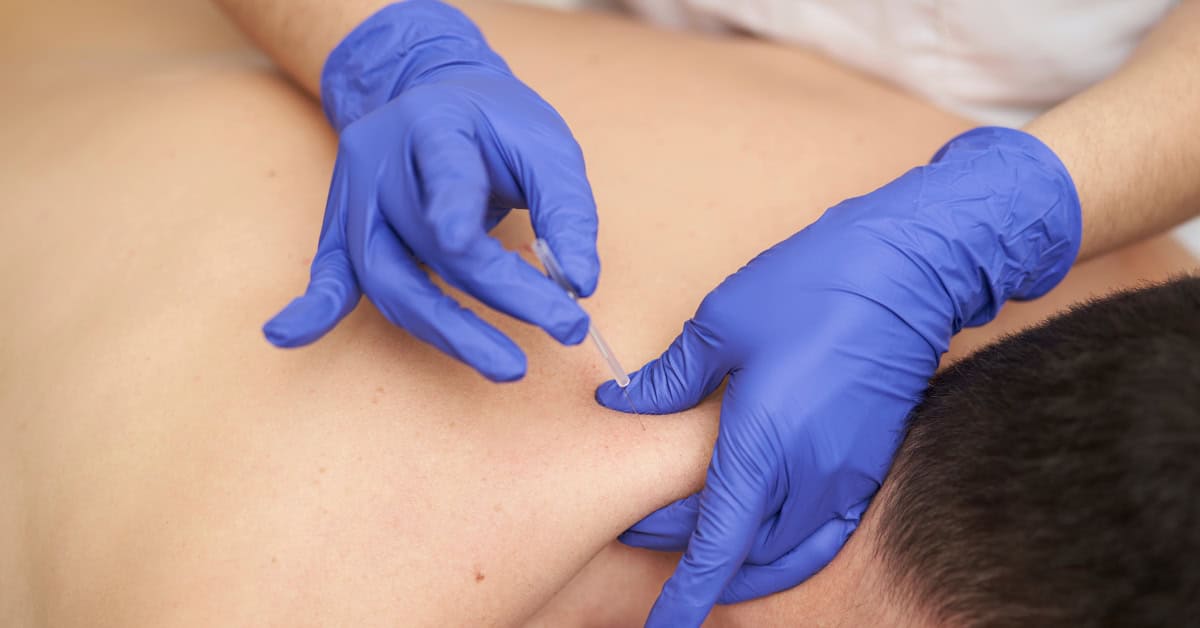
Dry needling uses a very thin, solid needle to target tight, irritable spots in muscles that many people call trigger points. No medication goes through the needle, which makes this technique different from a typical injection.
With frozen shoulder, muscles around the joint work overtime to protect the area. Over time, those muscles grip so hard that they limit motion and feed more pain and stiffness.
Dry needling helps by:
- Releasing guarded muscles around the shoulder and shoulder blade
- Calming irritated trigger points in the rotator cuff, upper back, and neck
- Improving blood flow in the treated area to support recovery
- Helping your nervous system turn down the intensity of pain signals
For an active person, those changes often translate into better movement and less fight from the shoulder during activity. Lifting your arm may feel smoother, rotating the shoulder can feel easier, and daily tasks begin to feel more manageable.
Dry needling does not replace movement or strength work. Instead, it creates an opening so that mobility drills, stretches, and strengthening exercises feel more effective and easier to tolerate.
What To Expect In A Dry Needling Session For Frozen Shoulder
A dry needling session for frozen shoulder usually starts with a detailed conversation and movement assessment. The therapist listens to when your shoulder first started acting up, what it prevents you from doing, and what your long term activity goals look like.
A thorough shoulder assessment often includes:
- Checking how far you can raise, rotate, and reach with your arm
- Watching how your shoulder blade and upper spine move together
- Testing strength in key muscles around your shoulder, back, and core
- Looking at the demands of your sport or activity, such as climbing holds, running form, or lifting patterns
Once the therapist understands your shoulder and your specific activities, they decide if dry needling fits into your plan. If it does, they explain where the needles will go and what sensations you can expect during treatment.
During dry needling for frozen shoulder, you may feel:
- A quick sting as the needle enters the skin
- A deep, dull ache inside the muscle
- A brief muscle twitch as the trigger point releases
- Pressure or a heavy feeling in the area
Most people describe the sensation as intense but short, rather than sharp like a traditional shot. Each spot usually receives only a brief period of active needle work, with rests between areas.
Right after the needling, therapists often guide you into gentle, controlled motion. Examples include:
- Shoulder pendulums or small circular movements
- Assisted or active arm raises
- Light rotational movements
- Shoulder blade control drills to re coordinate the area
This early movement helps the body use the new mobility immediately. It is common to feel sore later that day, similar to how a workout feels, and that soreness usually fades within one or two days.
There is no need to wait and hope frozen shoulder simply fades away. There is also no need to choose between total rest and pushing through pain that makes you wince every time you reach.
If you want to explore how dry needling and performance based physical therapy might support your recovery, the team at Total Pursuit Physical Therapy and Performance is ready to talk with you.
Talk to our team and find out how we can help you recover and get back to your best. Schedule a FREE Discovery Call with us at Total Pursuit Physical Therapy and Performance or give us a call at (920) 403 0085. Start taking your shoulder, and your active life, in a better direction.
Dry Needling Compared To Other Frozen Shoulder Treatments
When a shoulder feels locked and painful, the number of possible treatment options can feel confusing. Dry needling is one tool, and it works best when you understand how it fits among other common strategies.
Many people first try approaches such as:
- Rest and pain medication
- Cortisone injections
- Traditional physical therapy with manual work and exercises
- Surgery in severe and long lasting cases
Rest and pain medication can provide short term relief, but they rarely solve the stiffness or weakness behind frozen shoulder. Pain may ease for a time, only to flare again when you return to regular training or heavier tasks.
Cortisone injections can calm inflammation and decrease pain for some people. However, injections do not directly change muscle tension, movement patterns, or strength, which all play a role in frozen shoulder.
Traditional physical therapy often focuses on:
- Gentle stretching and joint mobilization
- Hands on soft tissue work and massage
- Progressive strengthening and movement retraining
These remain crucial elements of shoulder recovery, even when dry needling is part of the plan. Lasting change happens when the shoulder regains strength, control, and confidence through a full range of motion.
Dry needling adds value by making those other pieces easier to achieve. When tight, protective muscles relax and pain decreases, it becomes more realistic to reach higher, rotate further, and load the shoulder during exercises.
Surgery for frozen shoulder usually appears as a last resort when many months of active, conservative care fail to create improvement. A thoughtful combination of dry needling and performance focused physical therapy aims to help you avoid that path whenever possible.
How Dry Needling Fits Into A Full Shoulder Recovery Plan
Dry needling should be viewed as one key part of a complete shoulder recovery strategy. It often serves as a door opener, creating space for better motion and less pain so that other treatments can do their job.
A well rounded plan for frozen shoulder often follows a general progression:
- Calm pain and reduce muscle guarding
- Restore basic motion and shoulder blade control
- Build strength and endurance throughout the available range
- Rebuild power, speed, and confidence for specific sports or activities
Dry needling tends to support the first two stages most directly. When pain settles and mobility improves, the shoulder can then handle more challenging strength and control work that truly changes function.
Training pieces in a strong plan might include:
- Rotator cuff strengthening in multiple directions and angles
- Shoulder blade control exercises using bands, dumbbells, or body weight
- Upper spine mobility drills so the back can share the work
- Core and hip training to support better full body mechanics
For outdoor and athletic pursuits, the plan becomes even more specific.
- Climbers may follow progressions that gradually reintroduce overhead and dynamic reaches, while runners and hikers may focus on arm swing, posture, and pack carrying.
- Lifters and CrossFit athletes often rebuild overhead work with careful progressions that might begin with lighter presses and carries, then move toward pull ups and more complex lifts over time.
- Active parents and busy professionals may focus on safe lifting, carrying, and reaching that fits into real life demands.
A thoughtful plan respects current pain levels while still challenging the shoulder in safe, gradual ways. The goal is to stay engaged and moving instead of feeling sidelined or stuck.

Is Dry Needling Right For Your Frozen Shoulder
Dry needling can be a helpful option for many active adults and athletes who deal with frozen shoulder. It often fits well when the shoulder feels deeply achy and stiff, and when other strategies such as stretching alone have not created lasting change.
Signs that dry needling may be worth exploring include:
- Ongoing stiffness and pain that limit daily movement and recreational activity
- Tight, tender spots around the shoulder, upper back, or neck
- A desire to avoid or delay injections or surgery if possible
- Frustration with slow progress when using stretching and exercise by themselves
This approach aligns especially well with people who want to stay active while they recover. Training may need modifications, and intensity may shift, but movement remains a central part of healing.
Some people still need extra medical input before trying dry needling, such as those with certain bleeding disorders or those who take blood thinning medication. A strong needling plan also respects anyone who carries significant anxiety around needles, and other strategies can be used if that feels best.
The shared goal remains strong, confident, and capable movement. By combining dry needling with a performance focused approach to physical therapy, frozen shoulder becomes something you can actively work through instead of something that simply happens to you.
Turning A Stiff Shoulder Into Strong, Confident Movement
Frozen shoulder can feel limiting, but it does not have to end an active lifestyle. With the right plan, it is possible to stay in motion while the shoulder calms down, recovers, and regains strength.
At Total Pursuit Physical Therapy and Performance, the focus stays on helping you keep doing what you love, even if that looks a little different for a period of time. Hiking, running, lifting, or climbing can usually continue in smart, modified ways that support healing instead of fighting it.
The team builds plans that match your real world demands. That means your schedule, your sport, and your goals shape the strategy, instead of a one size fits all protocol.
How Total Pursuit Physical Therapy And Performance Supports Active Adults And Athletes
Total Pursuit Physical Therapy and Performance understands how frustrating it feels when a shoulder problem derails training or even simple daily tasks. The mission is to help people move from guarded and stiff to strong, confident, and capable again.
For frozen shoulder, care often blends several elements:
- One on one, performance minded physical therapy with a doctorate trained clinician
- Dry needling to help calm pain and muscle guarding when appropriate
- Targeted strength and mobility training that reflects your specific sport and lifestyle
- Clear education so you understand what you feel, why it happens, and what can help it change
Outdoor athletes in the De Pere and Green Bay region, such as archers, climbers, hikers, and runners, benefit from plans that reflect the real demands of their activities.
Recreational and competitive athletes, busy professionals, active parents, and older adults who want to stay resilient all find value in this personalized, athlete first approach.
Why Local, Athlete Focused Care Matters
A shoulder does not live in isolation from the rest of your life. It has to handle Green Bay wind on a winter run, a loaded pack on a trail, or a barbell in a busy gym.
At Total Pursuit Physical Therapy and Performance, we understand those demands because the clinic consistently works with active adults and athletes. The approach respects a desire to stay fit and pain free without immediately relying on medications, injections, or surgery whenever there are good alternatives.
Instead of focusing only on what must stop, the care process highlights what you can safely continue. From that foundation, progress builds step by step as the shoulder becomes stronger and more mobile.
Ready To Take The Next Step
There is no need to wait and hope frozen shoulder simply fades away. There is also no need to choose between total rest and pushing through pain that makes you wince every time you reach.
If you want to explore how dry needling and performance based physical therapy might support your recovery, the team at Total Pursuit Physical Therapy and Performance is ready to talk with you.
Talk to our team and find out how we can help you recover and get back to your best. Schedule a FREE Discovery Call with us at Total Pursuit Physical Therapy and Performance or give us a call at (920) 403 0085. Start taking your shoulder, and your active life, in a better direction.